I used to sit in meetings where pricing came up exactly twice a year. Once when budgets were set. Once when someone panicked about churn. That was it. Everything else - the campaigns, the retention drives, the upsell pushes - was built around a number nobody had seriously questioned in years.
It took me a while to name what was wrong. The number wasn't bad. The thinking behind it was just... absent. Pricing had been set, and then left alone. And while the business kept moving, the pricing sat still.
That's more common than people admit. And it's quietly expensive.
The assumption that costs the most
Here's something I've seen in telecom, in digital services, in eCommerce: when growth slows, the first instinct is almost always to blame the price. It's too high. Competitors are cheaper. We need to offer a discount.
Sometimes that's true. But more often, the price isn't the problem. The problem is that nobody has thought about what the price is supposed to communicate.
The reflex most businesses have
Lower price = more growth. Not converting? Go cheaper. Churn rising? Run a discount. Price is the dial you turn when nothing else is working.
What actually tends to be true
Better pricing structure = more revenue. The price point is rarely the issue. The architecture around it - how it's framed, who it's offered to, when - is doing no work at all.
Discounting feels like action. It shows up in the numbers quickly. But it trains customers to wait, it erodes margin, and it doesn't fix the underlying problem - which is usually that the value isn't clear enough, not that the price is too high.
The same pattern, everywhere
What's interesting is that once you start looking at pricing as a design problem rather than a finance problem, you see the same mechanics across completely different industries. The context changes. The logic doesn't.
Airlines
Price discrimination done right
Same seat, completely different price. Flexibility, timing, bundling - all of it signals value, not just cost. Revenue per seat goes up without adding a single route.
SaaS
Tiers as a conversion funnel
Free to Pro to Enterprise isn't a menu. It's a journey. Users grow into higher tiers when they hit friction - and the pricing structure is what creates that friction at the right moment.
Telecom
Long-duration plans reframed
Annual plans are almost always better value. But customers default to monthly because commitment feels risky. Change what you lead with - savings, not duration - and behaviour shifts.
eCommerce
Dynamic pricing from real signals
Price moves with demand, inventory, and segment. Margin is protected at peak moments. The customer doesn't feel manipulated - they feel like they got the right deal at the right time.
This isn't a telecom problem or a SaaS problem. It's a pricing design problem. And it looks the same everywhere you find it.
Three things that actually work
I'm not going to call these "frameworks" because that word has been drained of all meaning. They're just three things that, when applied together, tend to move revenue without requiring more acquisition spend.
Price to what the customer gains, not what it costs you
Cost-plus pricing is easy to defend internally and almost always wrong commercially. A customer paying for a subscription service isn't buying a product - they're buying an outcome. Convenience, confidence, entertainment, time saved. Price around that, and the conversation changes. People don't haggle over value the way they haggle over cost.
Design your tiers so the right choice is obvious
Most tiered pricing exists to offer options. Good tiered pricing exists to guide decisions. There's a difference. If your middle or premium tier requires customers to do mental gymnastics to justify it, the architecture is working against you. The goal is self-selection - not persuasion.
Stop treating new and loyal customers identically
A customer who's been with you for three years, uses your product regularly, and has seen real value delivered - is not the same as someone who signed up last week. They have different price sensitivity, different switching costs, different things they need to hear. A single price point serves neither of them particularly well.
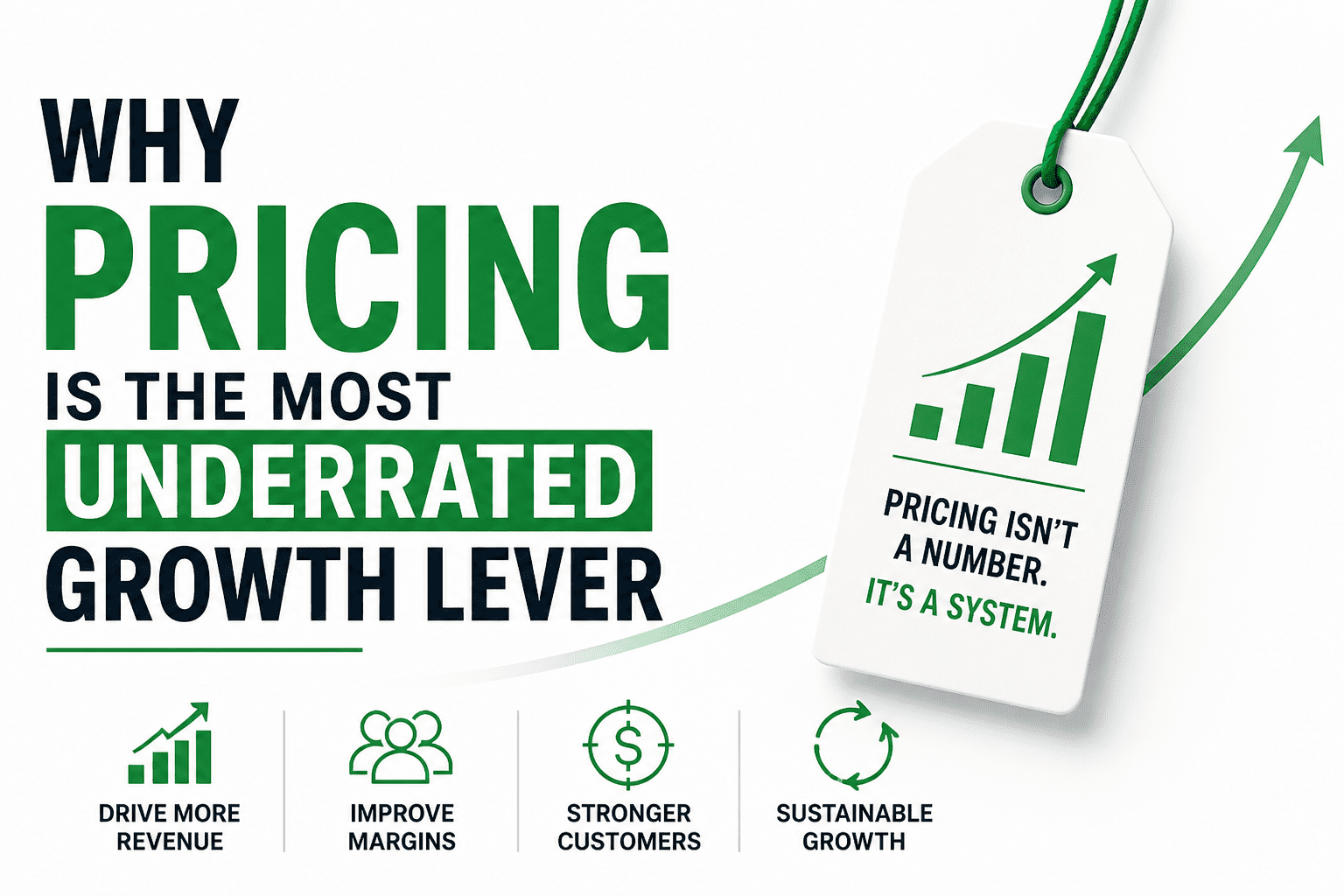
Pricing as a system - cross-industry patterns
The Same Levers. Different Industries. Same Results.
Understand value
What outcome is the customer actually paying for? Not your cost - their gain.
Segment by behaviour
Not all customers have the same willingness to pay. Pricing should reflect that reality.
Guide the choice
Design tiers so the highest-value option is the obvious default - not a hard sell.
Evolve with lifecycle
Price relative to the value delivered over time. Long-tenure customers behave differently.
Who uses this system
The mechanism is universal. Segment by value received - structure to guide choice - evolve with the customer journey. Industry is just context.
The part most people skip
Pricing decisions without data behind them are just opinions with confidence. And in most businesses I've worked in, there's no shortage of confident opinions about pricing - and a real shortage of the signals that would tell you if those opinions are right.
The numbers that actually matter aren't complicated. But they do require someone to be tracking them consistently:
- Where does churn spike by price point? At what tier do you start losing customers faster than you'd expect?
- Which segments generate the most revenue relative to cost? ARPU alone doesn't tell you this - you need to layer in service cost and lifetime.
- What's actually converting in your upsell flow? Which nudges work, for which customers, at which stage of the relationship?
- How does demand shift when price moves? Even rough elasticity data changes how you think about where headroom exists.
When these are tracked, pricing stops being a debate and starts being a process. Each decision informs the next. You start to see, clearly, where price and value are aligned - and where the gap is silently costing you.
What I've learned from getting this wrong
The honest version of this isn't "here are three frameworks that always work." It's more like: these things work when you apply them patiently, and the biggest obstacle is usually internal.
People are attached to prices. A price that's been in place for two years starts to feel like a decision that's already been made. Revisiting it feels risky. What if customers push back? What if it breaks something?
But the bigger risk, in my experience, is the one nobody talks about in the meeting - what revenue is quietly going uncaptured because pricing hasn't been treated as a living part of the strategy.
How pricing usually gets treated
Set it. Leave it. Revisit it when something breaks. Defend it when questioned. Discount it when results disappoint.
How pricing should get treated
Review it regularly. Track the signals that tell you when it's drifting. Treat it as a system that needs maintenance - not a decision that's already been made.
Whether you're in telecom, SaaS, eCommerce, or healthcare - the principle holds. Pricing isn't just how you monetise. It's how you communicate what your product is worth. And if that communication is unclear, inconsistent, or just... old - no amount of acquisition spend will make up for what you're losing at the other end. The good news is that fixing it rarely requires a new product. It usually just requires someone willing to look at the pricing seriously, probably for the first time in a while.