In 2019, I was sitting an admission test for a management program at IBA, University of Dhaka - one of the most respected business schools in Bangladesh.
I hadn't applied myself. Sheba.xyz selected me - one of a handful of people from the company chosen to go through the ACMP program. There was an admission test, which I passed, and then I found myself enrolled in the 13th batch in 2019 - a course co-designed with IIM Ahmedabad and IIT Delhi, backed by the ICT Division and Bangladesh Computer Council.
I had about four years of work behind me at that point. What I didn't fully anticipate was the room I was walking into. Most of my batchmates were senior professionals from across Bangladesh's IT industry - people with significantly more experience, more teams behind them, more decisions under their belt. I was, by most measures, one of the younger ones in that cohort.
That changes the dynamic of a program considerably.
What ACMP 4.0 actually was

The program was built specifically for mid-level managers in Bangladesh's IT and ITES industry - people who'd been doing the work operationally but hadn't had structured exposure to management thinking. Not abstract MBA theory. Real frameworks for the kinds of decisions you actually face at that level.
The curriculum covered more ground than I expected:
Technology 4.0Industry revolution and digital transformation
Business CommunicationStakeholder management and upward communication
Marketing StrategyCustomer-centric growth frameworks
HR ManagementLeading and developing teams at scale
Business AnalyticsData-driven decision making
FinanceCommercial thinking for non-finance managers
Project ManagementExecution, delivery and scope control
Business StrategyLong-term planning for Industry 4.0
The schedule was intense. There were days I was running between classes and back-to-back meetings at work, barely stopping for lunch. But the effort felt worth it from the very first session - Prof. Sheikh Morshed Jahan Sir and the faculty kept the bar high throughout.
The thing about doing well before you really understand why

Here's the slightly uncomfortable truth about having four years of experience in a room full of people with ten or fifteen: a lot of what you think you know is pattern recognition you can't fully explain. You know what to do in a given situation because you've seen something like it before. Your instincts are good. Your results are good. But if someone asked you to precisely articulate the reasoning behind your decisions - the actual management thinking underneath - you'd probably find the answer thinner than you expected.
That was me going into ACMP. Confident in practice, vague on theory.
The program changed that. Not overnight. Not dramatically. But it gave me a language and a structure for things I'd been doing intuitively - and once you can name something properly, you can examine it, challenge it, and improve it in ways you couldn't before.
One session that stuck with me early on was on work-life integration. The framing was that "balance" might be the wrong concept altogether - that the goal is excellence and fulfilment, not a neat split between work and life. That reframe sounds simple. But it shifted how I thought about what I was optimising for, in a way that lasted well beyond the program.
I knew what worked. I didn't always know why it worked. And not knowing why is a problem - because it means you can't reliably replicate it, teach it, or adapt it when the context changes.
Three specific shifts in how I thought
From managing tasks to leading people
I'd been good at getting things done. ACMP made me realise I'd been underinvesting in the people doing them. Not maliciously - just because results felt more legible than relationships. That shifted.
From reacting to structuring
A lot of my decision-making had been reactive - good at responding to what came up, less good at building the systems that meant fewer things needed to come up. The program pushed me toward the second.
From doing to communicating
The hardest module for me was around stakeholder communication and upward management. I'd never fully appreciated how much of strategy is communication - that a good idea poorly communicated goes nowhere.
How it changed the work afterwards

The honest answer is: all of it, gradually.
Some things changed immediately. Within weeks of finishing ACMP I was running team meetings differently - more structured, clearer on outcomes, less dominated by whoever talked loudest. That was a direct application of something I'd learned in the Business Communication module.
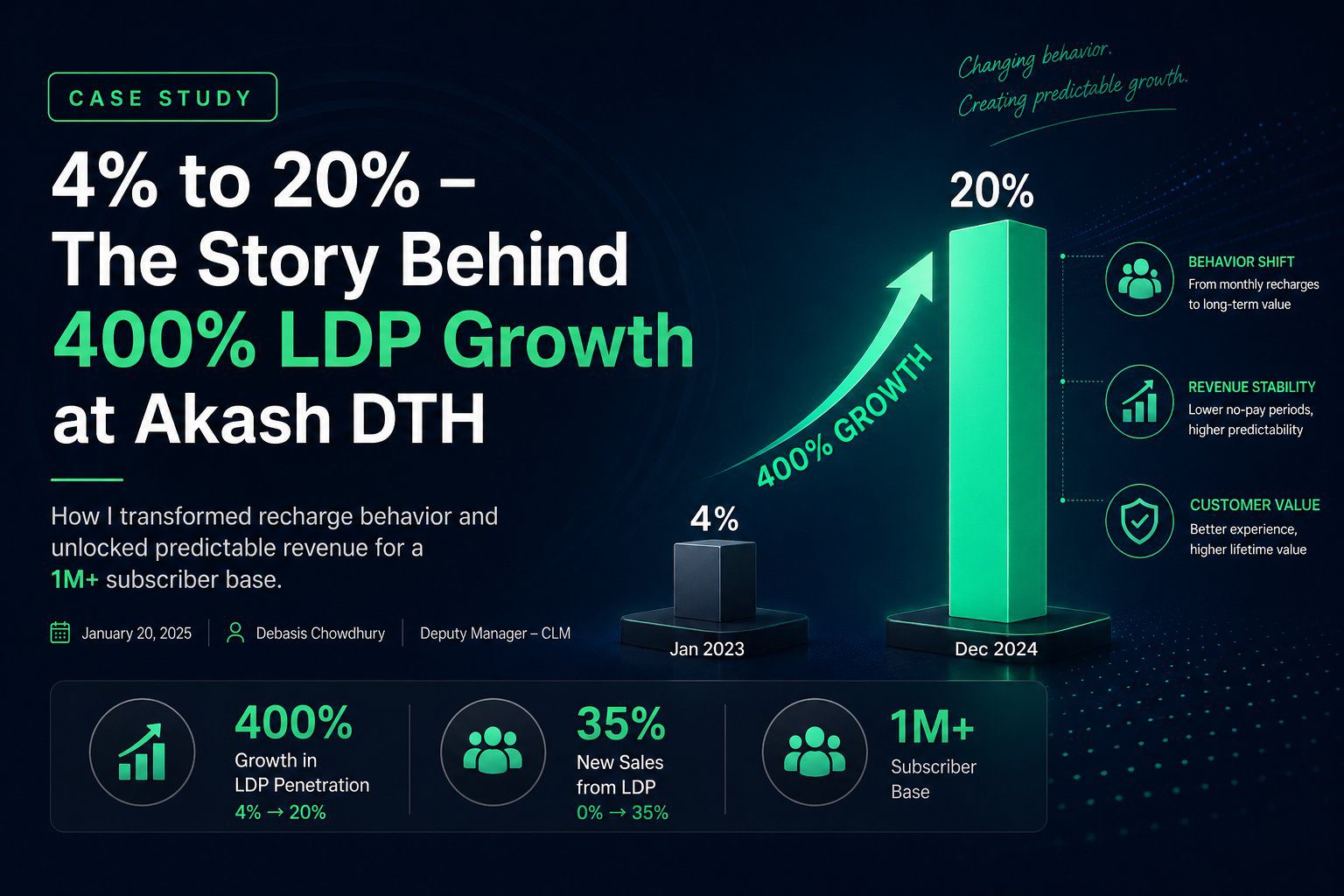
Other things shifted more slowly. The way I thought about CLM strategy at Akash DTH - the lifecycle systems, the segmentation approach, the connection between retention and revenue - that was shaped partly by frameworks I'd absorbed at ACMP and had been quietly testing ever since. It's hard to draw a clean line between the program and the work that followed, which is probably the mark of good training. It stops feeling like a course and starts feeling like how you think.
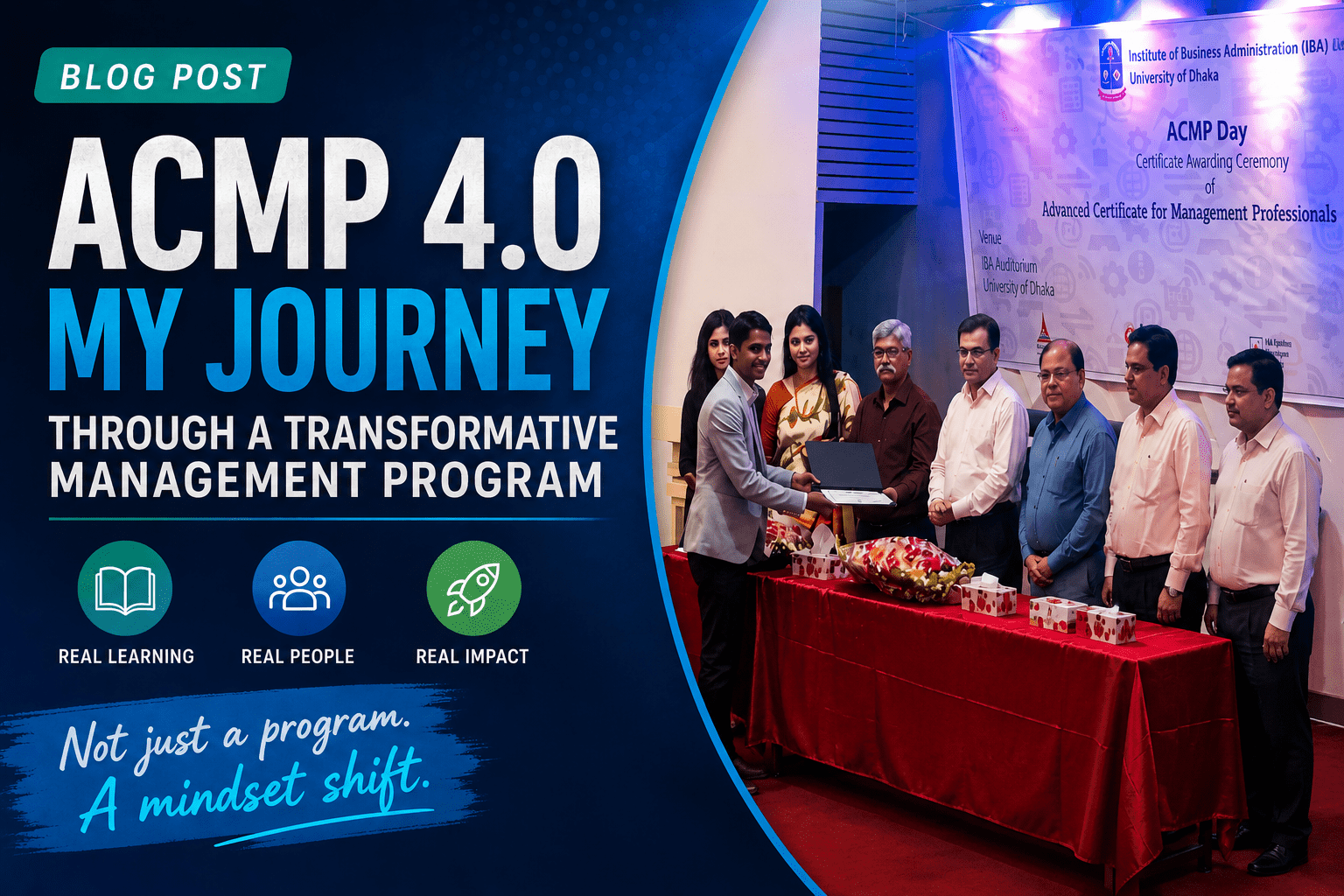
And then there's the credential itself. An IBA certification in Bangladesh carries genuine weight. There were conversations I got into, and rooms I was invited into, that would have been harder without it. The content built the knowledge. The credential opened the door. Both things are true.
Before ACMP
Decisions driven by instinct and experience
Managing output, underinvesting in people
Reacting well, structuring less
Good at the work, vague on the theory behind it
After ACMP
Decisions grounded in frameworks I could articulate
Investing in teams as a deliberate strategy
Building systems that reduced the need to react
Able to teach, replicate, and adapt - not just do
What I'd say to someone considering it
The temptation when you're mid-career and doing well is to assume that more experience will close whatever gaps you have. Sometimes it does. But there are things that experience alone doesn't give you - and structured management thinking is one of them. Experience tells you what happened. A program like ACMP helps you understand why, and that's a different and more transferable kind of knowledge.
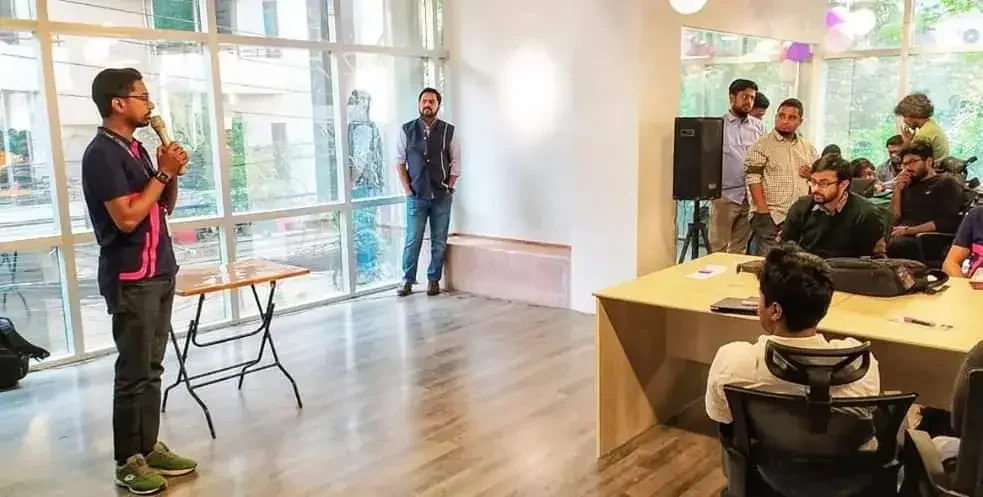
Being one of the younger people in that cohort was uncomfortable at moments and useful at others. You listen differently when you know the people around you have forgotten more than you've learned. Some of the best learning in ACMP came not from the faculty but from sitting next to someone who'd been running IT teams for fifteen years and watching how they framed problems.
I'm also glad I did it when I did - four years in, still early enough to be genuinely shaped by it, but experienced enough to recognise what was being taught. Earlier might have wasted some of it. Later and some of the habits would have been too set to shift.
2019 was a full year professionally. A lot was happening at Sheba.xyz. Taking time out to sit in a classroom felt like a risk. But looking back, it was exactly the right moment - enough experience to absorb what was being taught, enough runway left to actually use it. The knowledge you build deliberately compounds differently from the knowledge you pick up accidentally. ACMP was the first time I was deliberate about it. It wasn't the last.